

Topic: Education
Is coding still the best way to teach thinking in the AI era?
Even as AI writes code, is learning to code still the best way to build thinking skills? We put what coding taught beside what the AI era asks for.
“AI writes code now. Do our children still need to learn it?”
This has been one of the most common questions from parents at our recent AI camps.
Only a few years ago, coding was described as the core of future education. As computers came to run so much of modern life, being able to communicate with them became a skill worth teaching.
But the arrival of generative AI is changing that picture quickly.
More and more often, instead of instructing a computer directly, we tell an AI what we want and let it drive the computer and the software for us.
Which means one question deserves a second look.
In the age of AI, is coding still the most effective way to build students’ thinking and problem-solving skills?
Why did we learn to code?
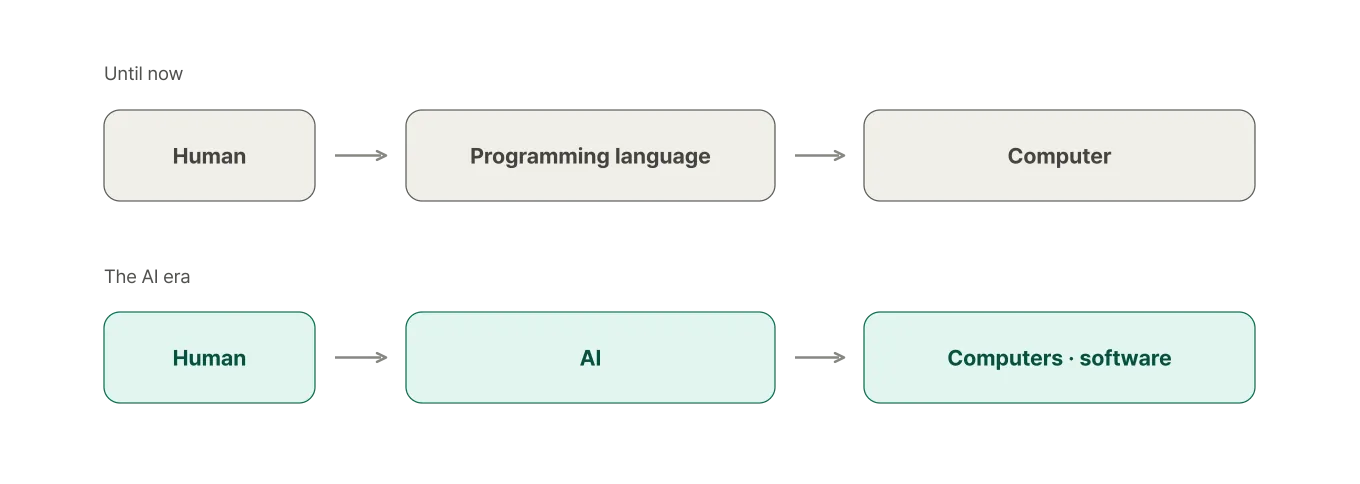
Coding is, at its root, a way of telling a computer what to do.
Computers can’t understand plain human language, so we used programming languages like Python or Java to write instructions in a form they could follow.
Put simply, the structure has looked like this.
Human → programming language → computer
Learning to code therefore called on several kinds of thinking at once.
You had to break a complex problem into smaller ones, decide the order in which to solve them, design for different outcomes under different conditions, and trace errors back to their cause and fix them when something broke.
That’s why coding education drew attention not only as training for future programmers, but as a way to develop logical thinking, structured thinking, and problem-solving.
We agree with that view of coding’s value.
What matters, though, is not coding as a method, but what we were trying to learn through it.
But we are talking to something new
AI is changing how humans and computers talk to each other.
Building a program used to mean writing the code yourself.
Now you can describe the program you want in plain language, and AI can write the code, fix errors, and even implement the features you need.
The relationship is gradually shifting to this.
Human → AI → code, computers, and software
That doesn’t mean programming is going away.
For anyone researching AI or building software in depth, programming will remain an important skill. AI itself runs on software, after all.
But when we think about the foundational education every K-12 student needs, the question changes shape.
Given the limited hours we have with students, should we teach them how to instruct a computer directly first?
Or should we start with the thing they will meet far more often — teaching them to understand AI, hand work to it, and judge what comes back?
The AI era is producing a new way to solve problems
When AI first reached the public, most of the attention went to prompts.
What should I ask the AI to get a better answer?
But the way people use AI has moved on fast.
What matters now is not simply writing one well-worded prompt.
You have to design the whole thing: what information you give the AI, what order you hand the work over in, which tools you let it use, and how you will judge and improve what comes back.
Working well with AI increasingly looks like this:
- define the problem,
- break it into smaller units,
- prepare the information it needs,
- design the sequence of work,
- assign roles to the AI,
- verify the results,
- and revise when something is wrong.
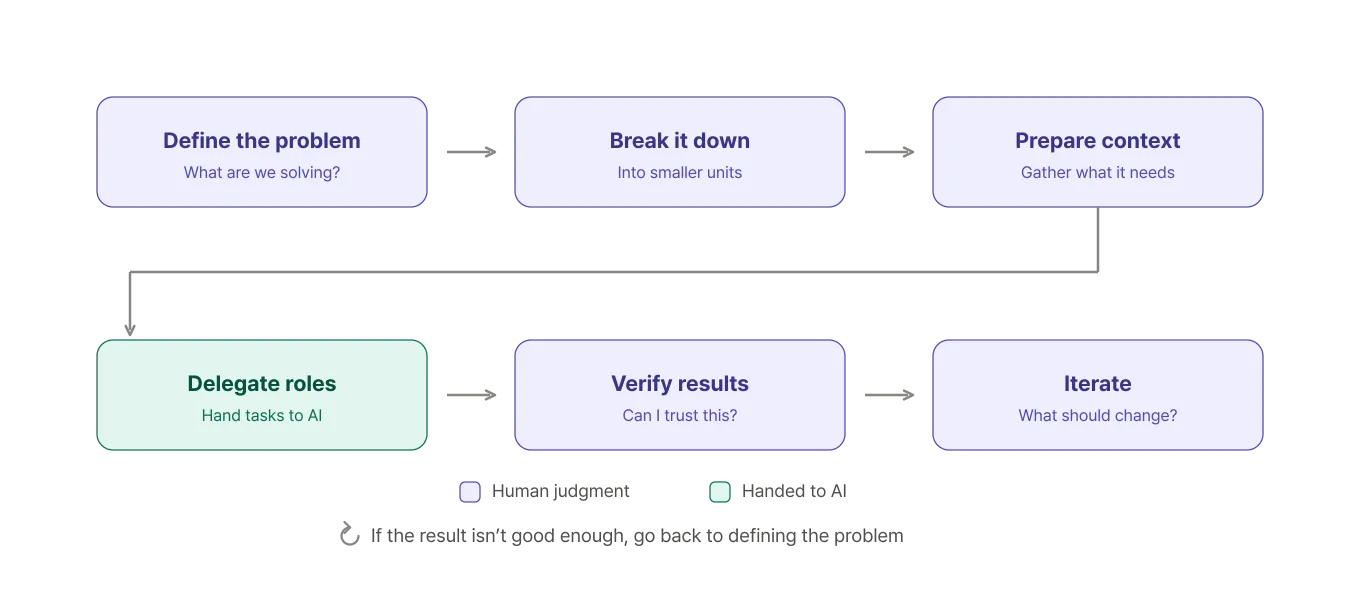
Look at that list again. It is almost exactly the thinking coding education has long emphasized.
Decompose the problem, build a procedure, reason about conditions, check the result, and improve through repetition.
The difference is that the primary means of expressing that thinking no longer has to be a programming language.
Using AI is not a shortcut around thinking
When AI writes the code, a worry naturally follows.
“Doesn’t that mean children stop thinking for themselves?”
It’s a fair concern.
If all a student learns is to ask a question and copy whatever comes back, that is hard to call good education.
But real AI education works the other way around.
For AI to produce something good, you have to know clearly what you want first.
Asking vaguely for “a good presentation deck” is one thing.
Thinking through the purpose of the talk, who the audience is, which sources should inform it, and what will tell you the result is any good — and only then handing over the work — is a completely different activity.
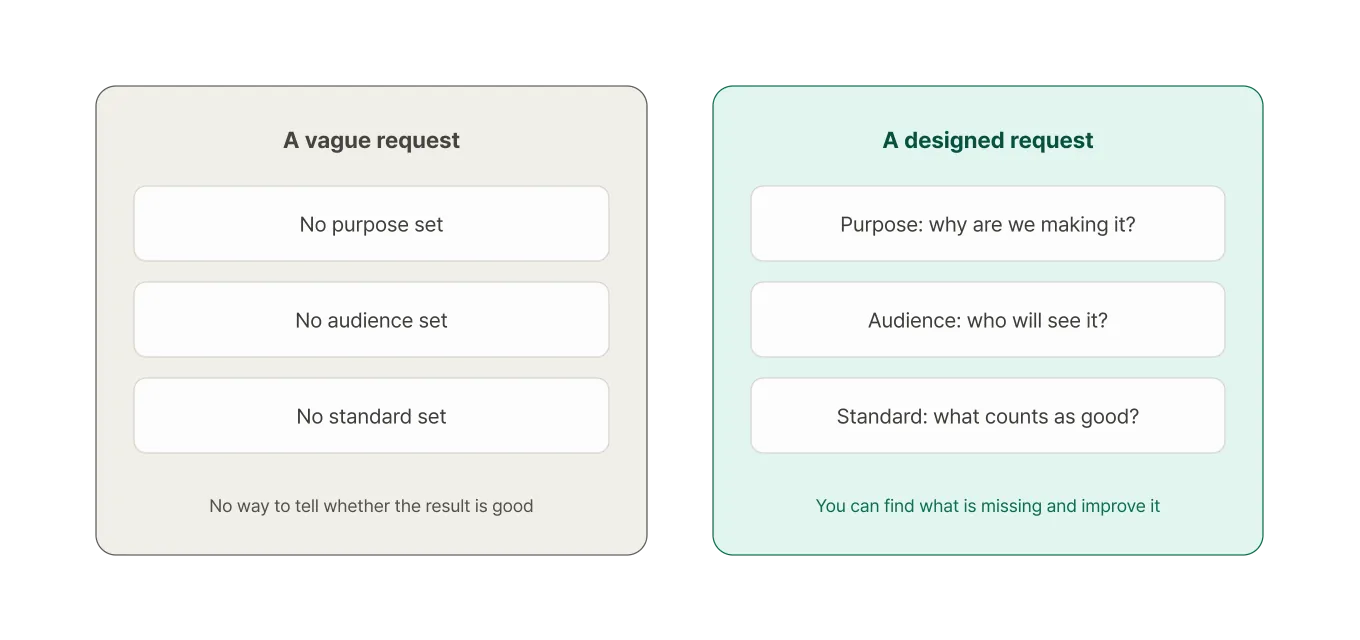
Judging whether the AI got it right is your job too.
You have to find what is missing, reason about why, supply the information that was lacking, and improve the result again.
In the end, using AI well calls for higher-level questions, not easier ones.
- What am I trying to build?
- Why should it be done this way?
- In what order should it be solved?
- What information does the AI need from me?
- Can I trust this result?
- What would I have to change to get a better one?
Working through those questions repeatedly is itself logical thinking, structured thinking, and problem-solving.
What coding taught us still holds
Much of what is new about working with AI didn’t come from an entirely new way of thinking.
Breaking complex work into smaller parts, chaining steps together, making something behave differently depending on the conditions, checking a result and trying again — all of it connects to ways of thinking that computer science and software development have refined over many years.
In that sense, AI education is not the opposite of coding education.
It is closer to taking the ways of thinking that coding and computer science built up, and applying them at a higher level with a new tool: AI.
Even without writing every line of code by hand, a student still has to structure the problem.
They still have to decide what comes first, what to hand to the AI, and what to judge for themselves.
What is shifting, gradually, is the emphasis — from the ability to build everything yourself toward the ability to understand and design a whole system.
One person, many AIs
Working with AI has already moved beyond talking to a single model, toward several AI agents splitting the work on a single problem.
In recent AI systems, rather than one agent handling everything, work is distributed across multiple agents or sub-agents with different roles.
Imagine a student working on a project about an environmental issue.
One AI could handle the background research while another hunts for gaps and counterarguments in what it found. A third could design the shape of the presentation, and a fourth could analyze the data or write a small program.
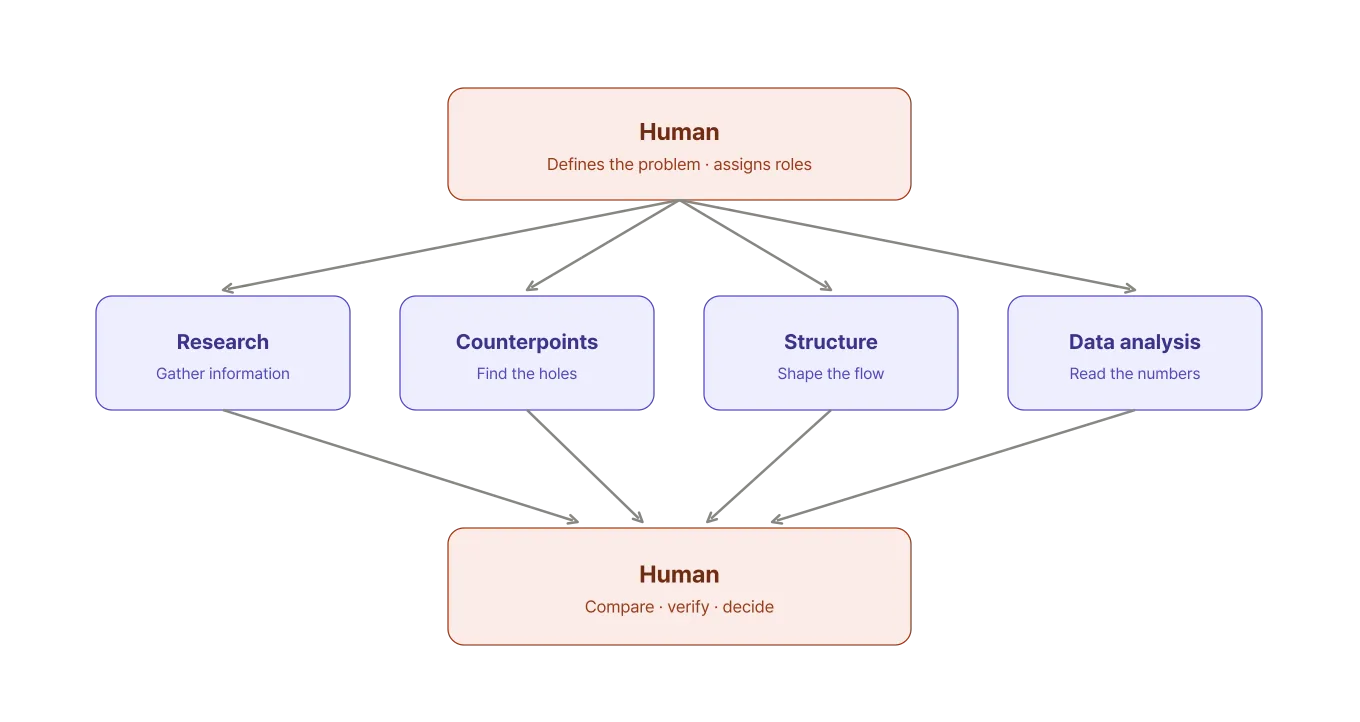
The number of AIs is not the point.
The more AIs working together, the higher the level of judgment required from the person.
You have to define what needs solving, split one large problem into several tasks, and decide who does what. Then you design the information and context each AI receives, compare and verify what they produce, and settle on a direction.
In other words, the human role is expanding from performing every task directly toward designing and coordinating a team of AI agents so that they solve the problem together.
In practice, AI agent systems already use structures where a central agent delegates to specialized agents, or hands work off to a particular agent as needed.
The abilities students will need in the AI era may look a lot like that.
Beyond asking good questions, it is the ability to structure a problem, divide the work, supply the right context, evaluate the results, and move several AIs toward a single purpose.
The core capability of the AI era is not only doing everything yourself, but organizing and directing a team of AI systems toward a goal.
Technology has always moved toward higher abstraction
None of this is happening for the first time.
The history of programming has repeated it.
Early developers had to work directly in low-level languages close to how the machine thinks.
Then came C, and later languages like Python and Java — easier for people to read and use — became widespread.
As libraries and open source appeared, using what someone else had already built became a natural way to develop.
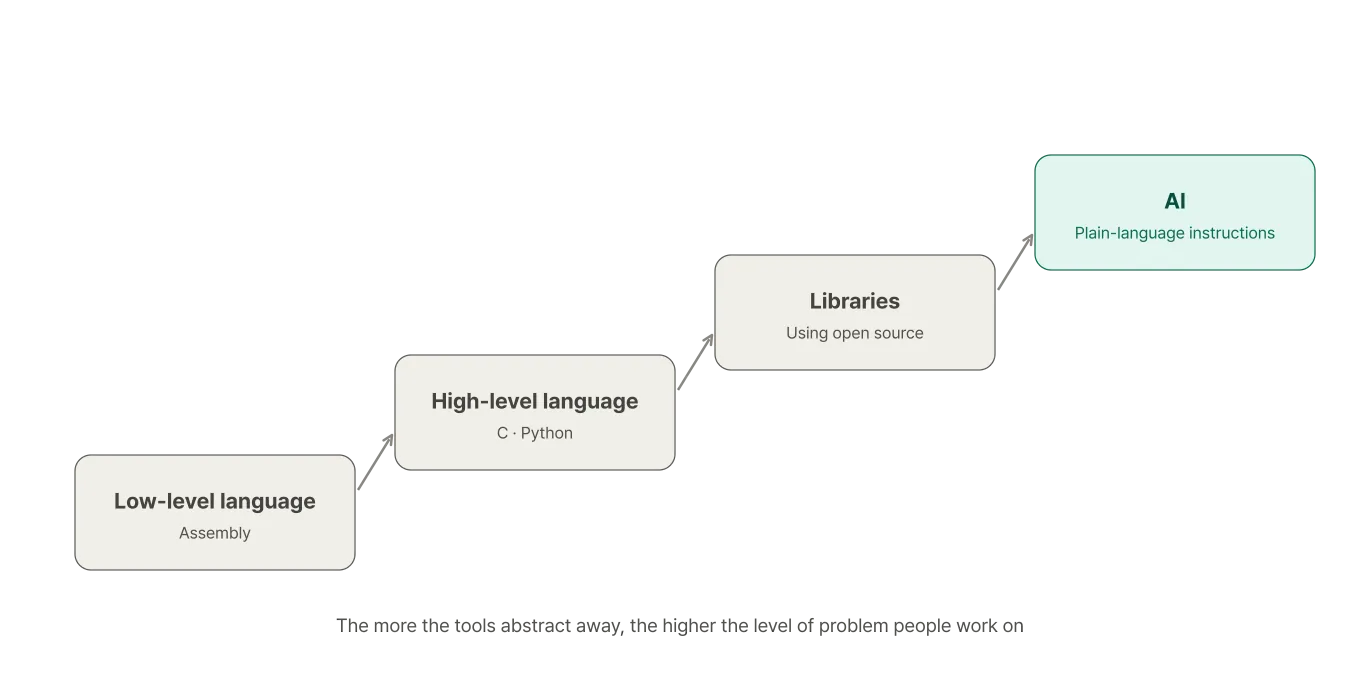
Every time a new tool arrived, someone said it: “If you don’t do it yourself, it isn’t real skill.”
But technology has kept abstracting away the lower-level work.
And because of that, people have been able to focus on larger and more complex problems.
AI can be read as the next step in that same movement.
AI writing code doesn’t mean humans stop thinking.
It means the layer of the problem humans have to think about is moving up one level.
From how to write the code, to what to build and how to use AI and computers to build it.
So should students stop learning to code?
Not quite.
Coding is still an excellent learning tool, and an important skill for any student who wants to understand software and AI deeply.
A student who has written programs firsthand can also understand the code and systems AI produces more deeply.
But from the perspective of the future education every student needs, the question has to be framed a little differently.
Does coding education work?
It does.
But we have to push the question one step further.
In the age of AI, is coding education still the most direct and efficient way to build thinking and problem-solving skills?
The goals coding education pursued still matter.
Thinking logically, structuring complex problems, and finding solutions through trial and error will matter more in the AI era, not less.
What may change is the route to those goals.
Where students once learned a programming language in order to talk to computers, the next generation will need to learn how to understand AI, explain a problem to it, design solutions with it, and check what it produces.
The purpose of coding education is worth keeping.
But how we get there deserves a fresh look as the times change.
Because what we have to teach students is not how to use one particular tool, but the capacity to understand whatever tool comes next and solve real problems with it.
- AI education
- coding education
- computational thinking
- AI literacy
- curriculum